
Subotica
Subotica is a northern Serbian city known for its Art Nouveau architecture. The City Hall, Synagogue and Raichle Palace illustrate how colour, ceramics and ornament shape the city centre.
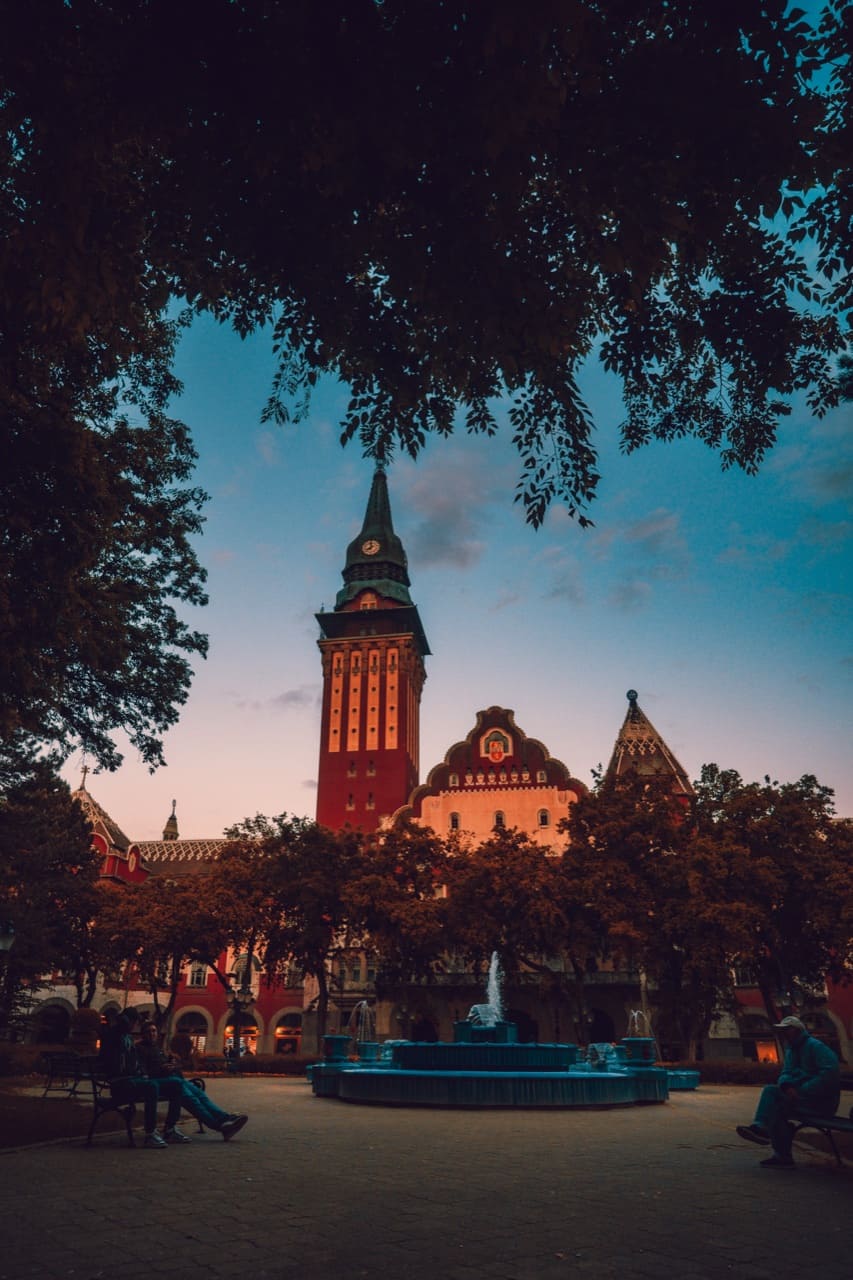
A free royal city
Subotica received free royal city status in 1779. The privileges drew artisans and merchants and helped the town expand. Around the turn of the twentieth century, civic institutions and private patrons commissioned buildings whose ceramics, ornament and colour still distinguish the city centre.
Architecture of the Secession
Compare three commissions: the municipal City Hall, the synagogue and the private palace of architect Ferenc Raichle. They show how the same architectural movement served public, religious and domestic life.
Jewish heritage
The local Jewish community took shape after families received permission to settle permanently in 1775. The synagogue and nearby community hall help tell its history. After the Second World War only a small surviving community remained to care for the synagogue.
Architects of the city
Marcell Komor and Dezső Jakab designed both City Hall and the synagogue. Ferenc Raichle designed his own palace. Looking at their buildings together makes it easier to recognise shared materials and individual approaches.
From the centre to Palić
Walk between City Hall, the synagogue and Raichle Palace in the centre. On a separate outing to Palić, compare the city buildings with the Secession architecture built for leisure beside the lake.
Related places
Sources
- https://www.serbia.travel/en/subotica/
- https://visitsubotica.rs/en/events-locations/city-center-subotica/
- https://visitsubotica.rs/en/download/art-nouveau-in-subotica/
- https://visitsubotica.rs/wp-content/uploads/2020/09/katalog-Subotica-2019.pdf
- https://visitsubotica.rs/en/turisticka-ponuda//cultural-monuments/jewish-community-hall-jevrejska-opstina/
- https://visitsubotica.rs/wp-content/uploads/2025/03/katalog-secesija-2025-SRB-ENG.pdf